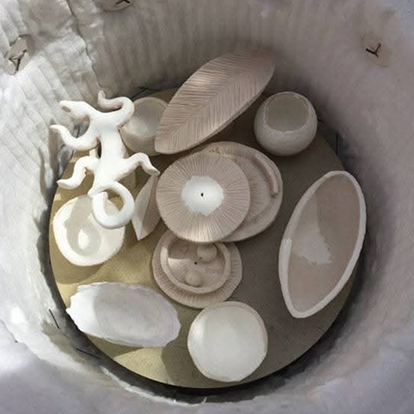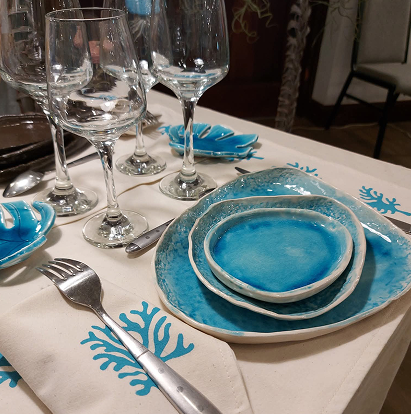
Artisanal ceramics do not require complicated maintenance. A few simple precautions are enough to preserve the material and glaze, and ensure the piece lasts over time.
A handmade piece can be part of everyday life for many years, as long as it is protected from knocks, sudden temperature changes and uses it was not designed for.
Decorative or food-safe: the first question to ask
Not all ceramics are made to be used in the same way.
Some pieces are designed to hold coffee, a salad, a sauce or a dessert. Others are made to be displayed, admired and enjoyed as decorative objects, without direct contact with food.
Before using a piece, always check its product page. Food-safe use, dishwasher or microwave compatibility, and recommended care instructions are specified in each Ū Matatea product description.
Impacts: the first risk to avoid
A well-fired ceramic piece is strong, but it remains sensitive to impact. A fall, a hard knock against a surface or forced stacking can cause chips.
Thin pieces, handles and raised details are the most exposed areas. They should be handled with extra care, especially when washing, storing or moving them.
Be careful with sudden temperature changes
Ceramics do not react well to sudden temperature changes.
Avoid placing a cold piece under very hot water, or setting a hot bowl directly onto a cold surface. Over time, these temperature shocks can weaken the piece, especially if it is thin or delicately glazed.
Dishwasher and microwave: check before use
Some pieces are dishwasher-safe or microwave-safe. Others require more care.
When compatibility is not clearly indicated, hand washing is the safest option: a soft sponge, warm water and a little soap are all you need.
Abrasive sponges and harsh cleaning products should be avoided, especially on decorated pieces, raised details or delicate glazed surfaces.
Storing and displaying your pieces
Functional pieces can be stacked if their shape allows it, without putting too much pressure on the edges.
Decorative objects should be placed on a stable surface, away from busy areas and any risk of falling.
What if a piece gets chipped?
A knock or a fall can happen, even when a piece is carefully looked after.
For a decorative object, a glue suitable for ceramics may sometimes be used to repair the piece. Some repairs can also be highlighted in the spirit of kintsugi, a Japanese technique that celebrates cracks rather than hiding them, often with a gold finish.
For a piece intended for food use, extra care is needed. A repaired ceramic piece is not always suitable for contact with food, the dishwasher or the microwave. In this case, the piece can be kept as a decorative object instead.
In summary
To care for handmade ceramics:
- check whether the piece is decorative or food-safe;
- follow the instructions on the product page;
- avoid knocks and forced stacking;
- avoid sudden temperature changes;
- use the dishwasher or microwave only if the piece is designed for it;
- choose gentle hand washing for delicate pieces;
- place decorative objects on a stable surface.
A handmade ceramic piece can be part of everyday life for a long time, as long as its clay, glaze and intended use are respected.
To discover the ceramic objects created in the Ū Matatea workshops, explore our collection in the shop.