There are scents that instantly transport us.
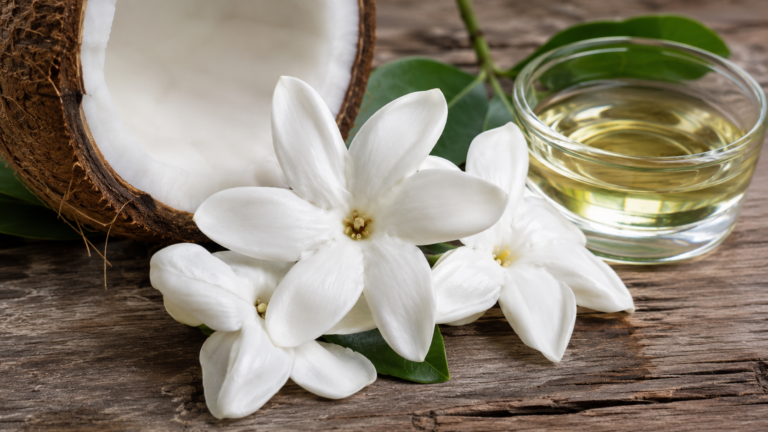
With monoï, the journey begins as soon as the bottle is opened. The fragrance of tiare blends with the soft, rounded notes of coconut, immediately bringing to mind the sea, warmth on the skin and the gentle feeling of the islands.
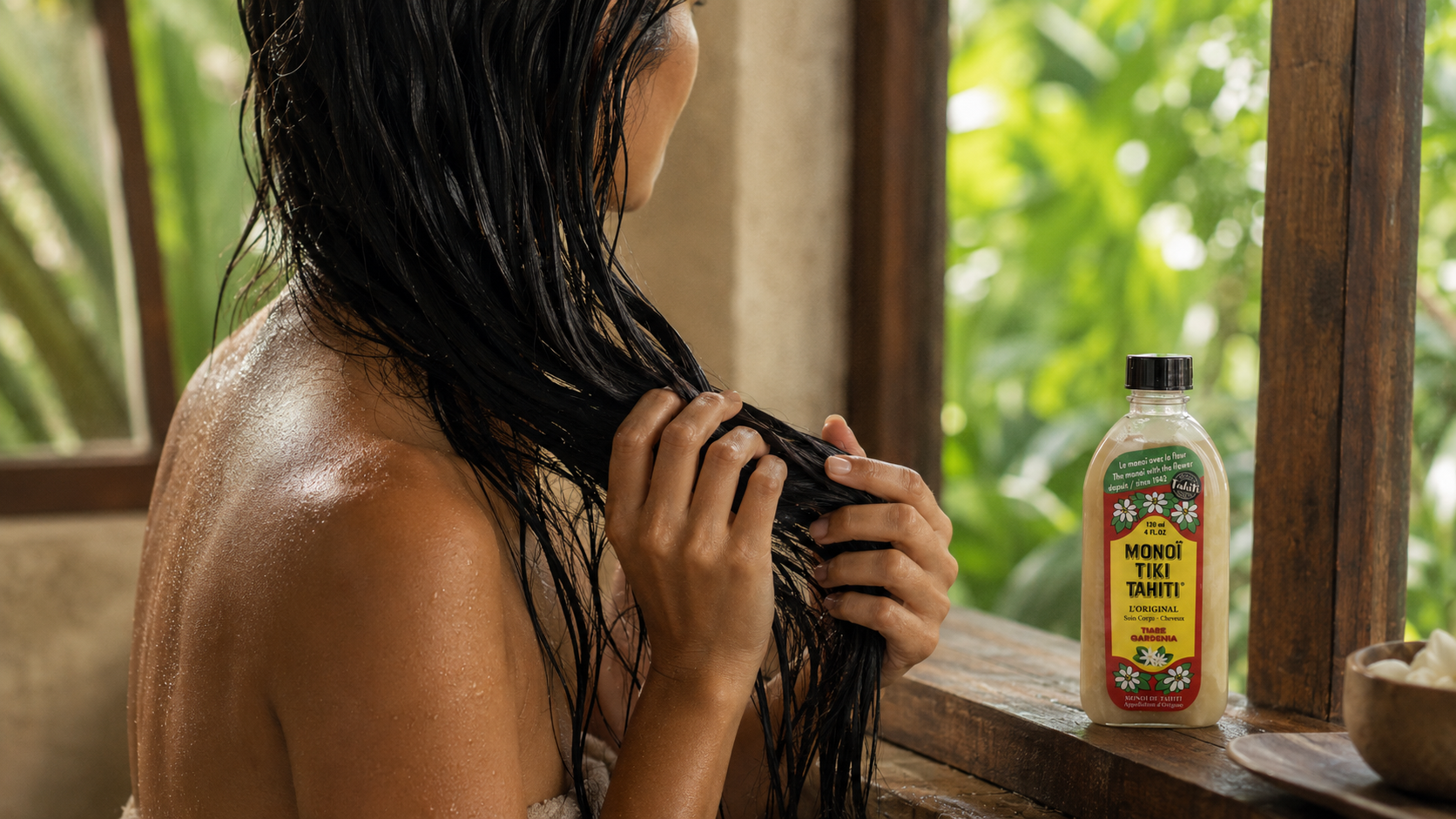
In French Polynesia, monoï is part of everyday life. It nourishes the skin, softens the hair, is used for massage and delicately scents daily care rituals. After a shower, it is warmed between the hands, massaged onto the shoulders, and sometimes applied in a small amount to the lengths of the hair before going out.
Its beauty also lies in its simplicity: an oil made from coconut, tiare flowers and know-how passed down through generations. In French Polynesia, it belongs to a natural care ritual, close to the body and to everyday life.
But to enjoy it fully, it helps to know a few simple ways to use it. Monoï is rich: when used well, it nourishes, scents and leaves a satin finish. Used too heavily, it can weigh down the hair, leave the skin feeling too oily, or be wrongly mistaken for sun protection.
So, how should you use Monoï de Tahiti? On the skin, in the hair, after sun exposure, as a massage oil or as an evening ritual: here are the essential tips to know.
After the shower, as a body care oil
The best time to apply monoï is just after a shower, when the skin is still warm and slightly damp.
Pour a few drops into the palm of your hand, warm the oil between your hands, then gently massage it onto the legs, arms, shoulders or décolleté. A small amount is enough to leave the skin supple, satin-soft and delicately scented.
On damp skin, it spreads more easily, absorbs more beautifully and leaves a satin finish rather than a greasy film. That is the simple tip to remember: do not wait until the skin is completely dry.
Monoï is not just for holidays. In winter, it softens dry areas and brings a touch of comfort to an evening routine. In summer, it naturally finds its place after the beach, after a quick shower, when the skin has been exposed to wind, salt or sun.
After sun exposure: yes, but never instead of sunscreen
This is one of the most common misconceptions about monoï.
Monoï does not protect against the sun. Used on its own, it does not provide reliable sun protection and should never replace SPF 30 or SPF 50 sunscreen formulated to protect against both UVA and UVB rays.
Its true place is after exposure: on clean, freshly rinsed skin, to nourish, scent and restore a feeling of comfort.
After a day outdoors, rinse the skin to remove salt, sand or chlorine, then dry it without rubbing too much. Then apply a small amount of monoï to areas that feel tight: legs, arms, shoulders or décolleté.
On the hair: a few drops on the lengths
Monoï works very well on the hair, as long as it is used sparingly. Its rich texture is particularly suited to dry lengths, damaged ends or hair exposed to sun, salt, wind or chlorine.
Applied in a small amount, it helps soften the hair, add shine and reduce the dry appearance of the ends. The simplest method is to warm one drop between the palms, then apply it only to the lengths and ends.
On curly or wavy hair, you can gently scrunch the lengths to revive movement without breaking the curl. On fine hair, it is best to use a very small amount and avoid the roots, so as not to weigh the hair down.
For a deeper treatment, monoï can also be used as a pre-shampoo oil treatment. Apply it to the lengths, leave it on for twenty minutes to an hour depending on your needs, then wash thoroughly with a gentle shampoo. If your hair is very dry, you can leave it on for longer.
Before the sea or pool: helping protect the lengths from dryness
Before swimming, monoï can be applied in a very thin layer to the lengths and ends. The aim is not to saturate the hair, but to help limit the feeling of dryness caused by salt, chlorine, wind or sun.
The method is simple: warm a small amount between your hands, apply it only to the lengths, then tie your hair into a braid or a loose bun. After swimming, rinse with fresh water if possible to remove salt or chlorine.
This is particularly useful on holiday, when hair is washed more often, exposed to the elements and sometimes a little neglected in the care routine.
As a massage oil: a relaxing ritual
Monoï is naturally suited to massage. Its texture allows the hands to glide easily over the skin, while its tiare fragrance brings a soft, enveloping sensation.
A few drops are enough to massage the shoulders, legs, feet or back. The massage does not need to be technical: the important thing is to take your time, warm the oil between your hands, then slowly massage the areas that need it.
In the evening, after a warm shower, monoï becomes a very simple ritual: warm the oil between your hands, massage the shoulders, legs or feet, and let the scent of tiare gently accompany the end of the day.
Why does monoï solidify?
If your bottle of monoï becomes solid when the temperature drops, there is no need to worry: this is completely normal.
Like coconut oil, monoï naturally solidifies when it gets cooler. To return it to a liquid texture, simply run the bottle under lukewarm water for a few moments, or warm it gently between your hands. Gentle warmth is enough; there is no need to heat it strongly.
This change in texture does not affect the quality of the product. Monoï can move from liquid to solid depending on the temperature, without losing its properties or fragrance.
Can monoï be used on the face?
Monoï can occasionally be applied to certain dry areas of the face, but this is not its main use.
If your skin is dry and tolerates oils well, you can apply a very small amount in the evening, for example to an area that feels tight. However, if your skin is combination, oily, sensitive or prone to blemishes, it is best to avoid using it on the face.
Monoï remains above all a care oil for the body and hair, where its rich texture and fragrance are best suited.
Mistakes to avoid
The most common mistake is using monoï as sun protection. Monoï may smell like holidays, but it does not protect against the sun. For any exposure, you should apply sunscreen suited to your skin, with a sufficient SPF.
Another common mistake is using too much. Monoï is a rich oil, best used in small touches. A few well-applied drops are often enough to nourish the skin, delicately scent it and leave a satin finish.
On the hair, the amount used is just as important. Used like a classic serum, monoï can quickly weigh down fine hair. It is better to apply it only to the lengths and ends, adjusting the amount according to your hair type.
Finally, avoid getting dressed immediately after applying it, especially with delicate or light-coloured fabrics. Like any oil, monoï needs a few moments to melt into the skin.
In summary: how to use Monoï de Tahiti
Monoï de Tahiti can be used in several ways, always in small amounts:
- on slightly damp skin after a shower;
- as a nourishing care oil after sun exposure;
- on the lengths and ends of the hair;
- as a pre-shampoo oil treatment;
- before the sea or pool, to help protect the lengths from dryness;
- as a massage oil;
- on dry areas such as elbows, knees, heels or cuticles.
Used with care, monoï transforms a simple routine into a true moment of self-care. Just a few drops are enough to leave the skin feeling softer, the hair smoother, and to bring back that tiare fragrance that instantly recalls the islands.
To discover the Monoï de Tahiti selected by Ū Matatea, you can find it in our online shop.